Outdoors
Chasing waterfalls in the White Mountains
Six falls ranked by effort, from a five-minute roadside stop to a full-day climb — with the parking situation for each.
Read the piece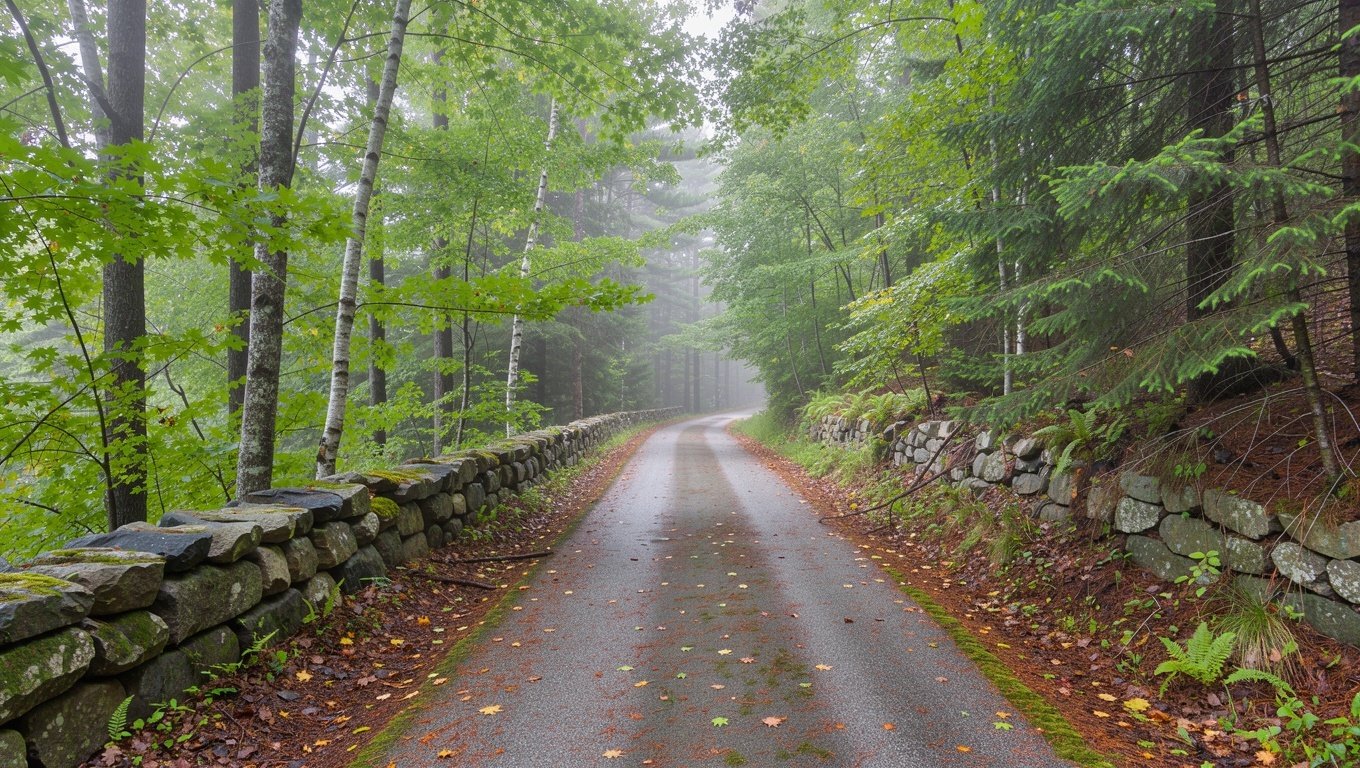
Long reads and short observations on travelling New Hampshire well — the timing, the small towns, and the things the guidebooks skip.
Written to answer the questions that come up after the main planning decisions are made.
Six falls ranked by effort, from a five-minute roadside stop to a full-day climb — with the parking situation for each.
Read the piece
Hash from a can versus hash from a griddle, the four grades of maple syrup, and why the counter seat is the good one.
Read the piece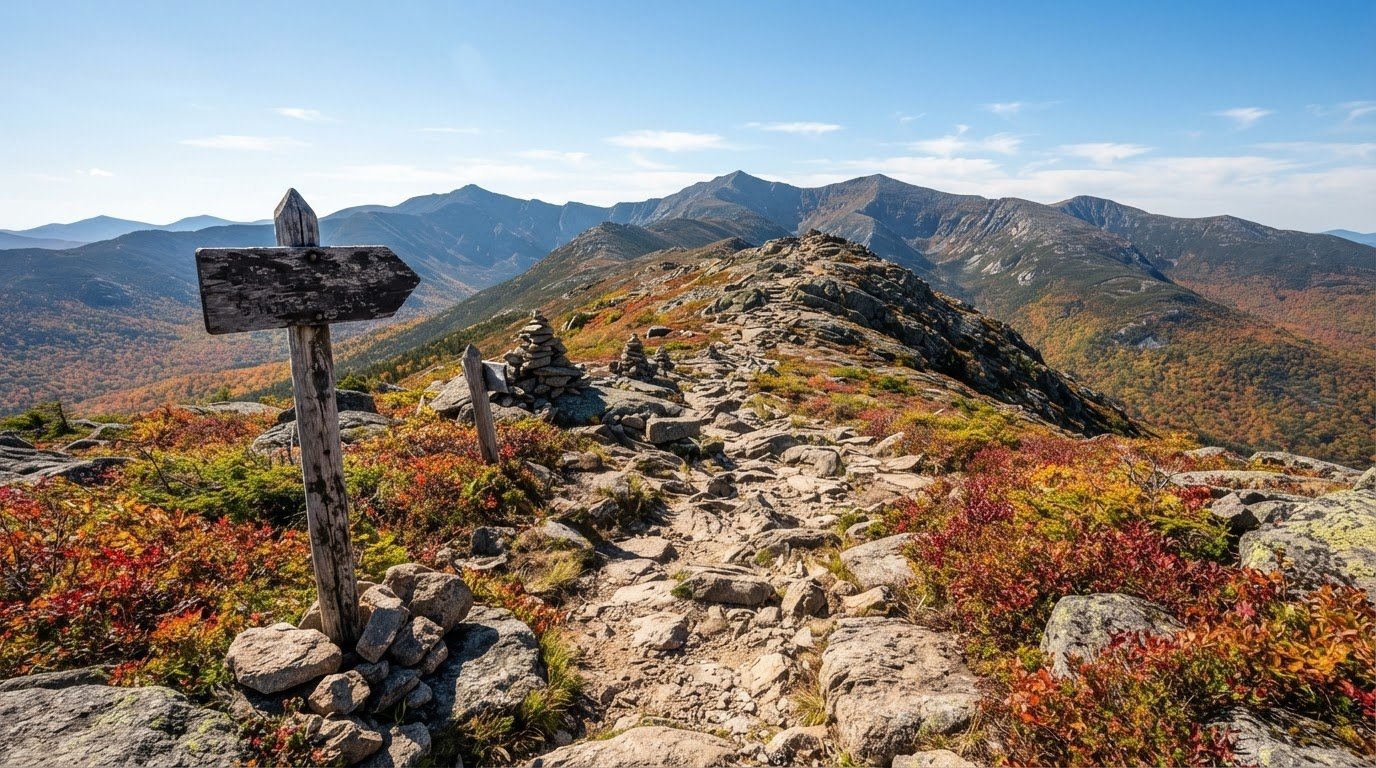
Late March to May: what closes, what quietly opens, and why the trail signs ask you to go somewhere else.
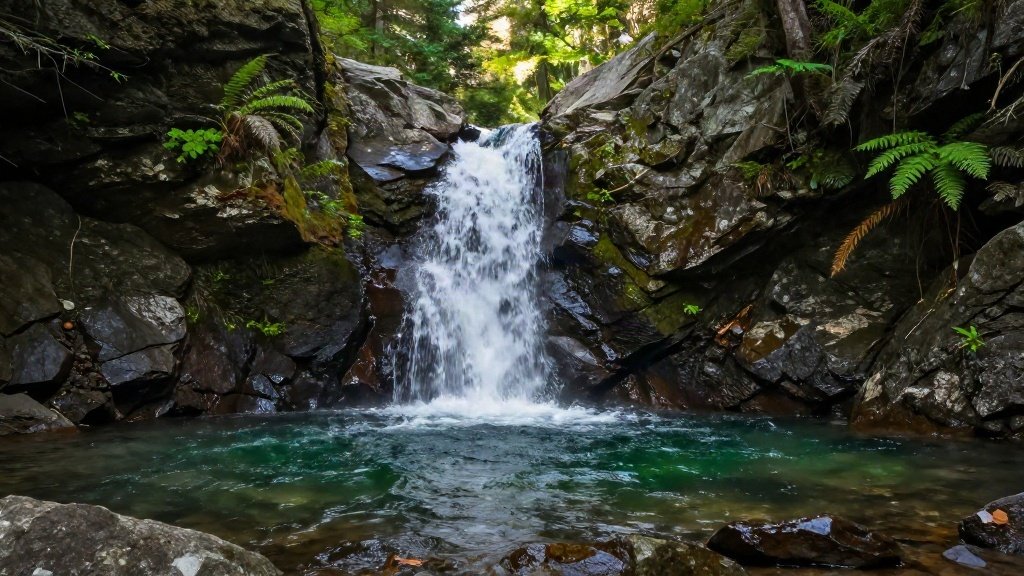
Read the pieceNew Hampshire is not a land of dramatic cascades. What it has instead is a great number of small, well-placed falls, most of them reachable in under a mile — which makes them the single most reliable outdoor activity for a mixed-ability group.
The ranking below is by effort, not by beauty. In practice the easy ones are the ones you will actually do on a driving day, and the hard ones are the reason to build a hike around a specific valley.
Sabbaday Falls, on the Kancamagus Highway, is a quarter-mile walk on a graded path to a three-tier drop into a granite flume. There is a car park, and in foliage season it fills by 9am. Glen Ellis Falls in Pinkham Notch is a short paved descent through a stone tunnel to a 64-foot fall — the best effort-to-payoff ratio in the state. The Basin in Franconia Notch is a fifteen-minute loop around a glacial pothole. Diana's Baths near North Conway is under a mile of gentle climbing to a series of ledges and pools that children can paddle in — busy but worth it early.
Arethusa Falls, off Route 302 near Crawford Notch, is roughly a three-mile round trip and the state's tallest single drop at about 140 feet. It is a steady climb, not technical. Flume Gorge is not technically a waterfall walk, but the boardwalk through the 800-foot granite chasm with water running beneath it is the state's signature natural sight and needs a timed ticket booked ahead.
Related reading: the White Mountains region guide covers the trailheads and the things to do page groups these with other outdoor options.

The diner is the most democratic institution in the state. It is also the place where a visitor can learn more about New Hampshire in forty minutes than from any museum.
Start with the hash. Real New Hampshire corned beef hash is cooked down on the griddle until the edges crisp; the version that arrives as a pale slab from a tin is the tell that you are in a tourist diner rather than a local one. Ask what the hash is and the answer is usually candid.
Then the syrup. New Hampshire grades maple syrup as Golden Delicate, Amber Rich, Dark Robust and Very Dark Strong. Golden is the earliest boil and the lightest; Dark Robust is what most people picture when they think of maple. If a place brings you a small jug rather than a plastic portion, order the pancakes.
The counter seat is better than a booth. You will hear the town's business — the road closure, the school vote, the snow forecast — and the coffee gets refilled without asking.
New Hampshire produces well under a tenth of what Vermont does, so most syrup sold at roadside stands is genuinely local and often boiled by the family selling it. Sugar shacks open to visitors in March, when the sap runs. See the spring guide for timing.
Between the last good ski weekend and the first proper hiking weekend there is a gap of about six weeks that most guides ignore. It is genuinely awkward — and genuinely quiet, which is the argument for going.
Mud season runs roughly from late March to mid-May, later at elevation. Snowmelt saturates the ground, so a trail that is frozen at 7am is ankle-deep by noon, and walking on it widens the damage into channels that persist all summer. This is why the Appalachian Mountain Club and the state's trail organisations ask hikers to stay off the high trails and use low-elevation paths or paved routes instead.
What that leaves is not nothing. The Seacoast is at its best in April — Portsmouth without queues, the marginal way at Odiorne Point dry underfoot. The covered bridges and the Merrimack Valley's mill towns are a road trip that needs no trail. Waterfalls are running at full volume.
If you are coming in this window, plan around towns rather than summits, and expect to find the good places half empty. That is the trade.
Topics in progress, each answering a question that recurs in planning threads.
Direction, timing and where the crowds actually block — the pass is 34 miles and the bottleneck is three car parks.
Layering for a summit that can be 40°F colder than the valley, and the one piece of kit most visitors forget.
Why peak moves north to south over three weeks, and how to use that to arrive at the right place on the right day.
Seven towns that almost nobody builds a trip around and probably should.
Late March to mid-May, later at elevation. Trails soften and many mountain roads close. Towns, the coast and the covered bridges are the better bet; the upside is that nothing is crowded.
Sabbaday Falls on the Kancamagus is a quarter-mile graded walk to a three-tier drop. Glen Ellis Falls in Pinkham Notch is a short paved descent with a bigger payoff. Both are roadside.
Town diners and Saturday church-hall fundraisers, not the places with a gift shop. Order the hash, sit at the counter, and ask what is good.