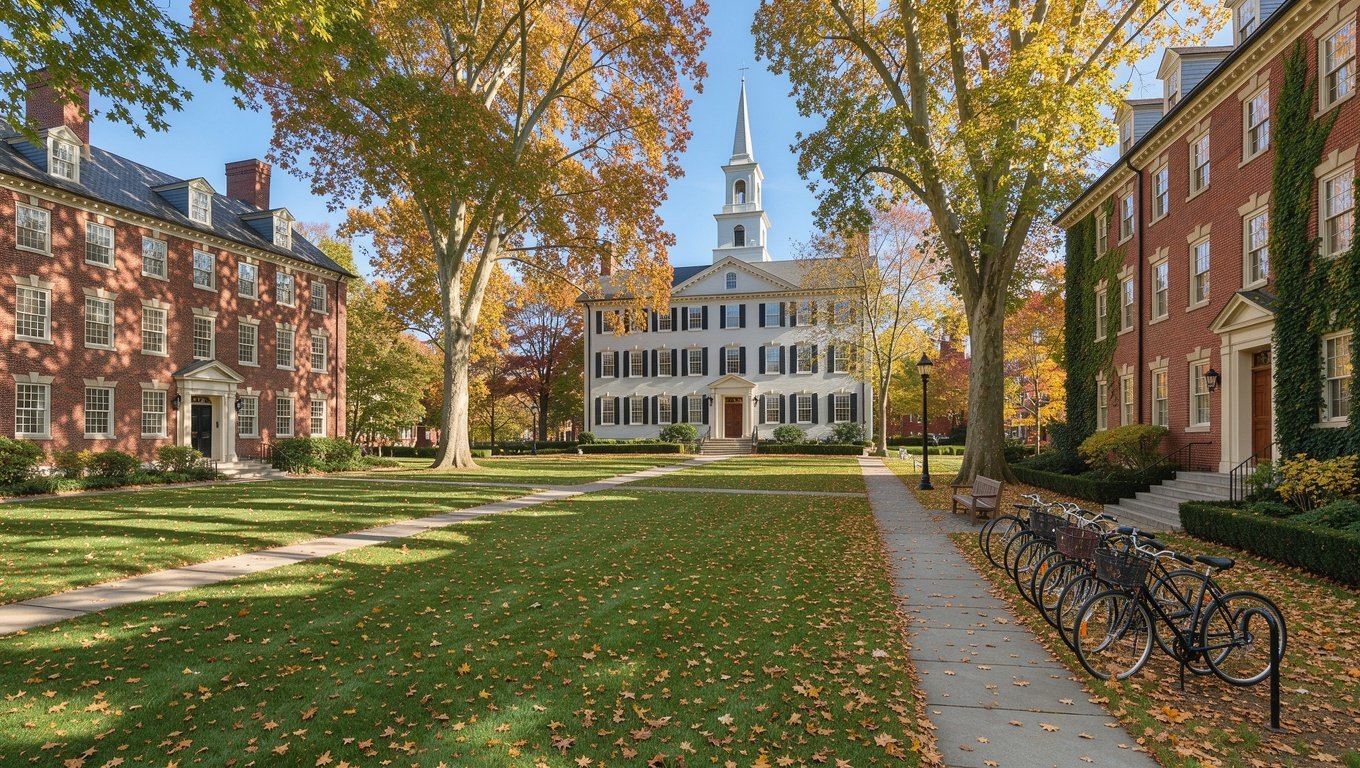
New Hampshire's campuses, from a visitor's chair
Not an admissions directory. A guide to the college towns, museums, public lectures and match-day Saturdays that are worth planning a trip around.
College towns are the state's other attraction
New Hampshire has a small population and an unusually dense spread of colleges and universities. For a visitor that matters, because a campus is usually the most architecturally intact, most walkable and most reliably open part of a small New England town. The Green at Hanover, the brick row along Main Street in Durham, the common at Plymouth — these are the town centres.
They also supply the things a rural region otherwise lacks. A good coffee shop on a Sunday. A museum with real holdings. A lecture or a concert on a Tuesday night in February. A hockey game that sells out a 6,500-seat arena in a town of 15,000 people.
So this page is organised the way a traveller would use it: which campuses are worth an hour, which towns are worth a night, what is actually open to the public, and how each one slots into a regional route.
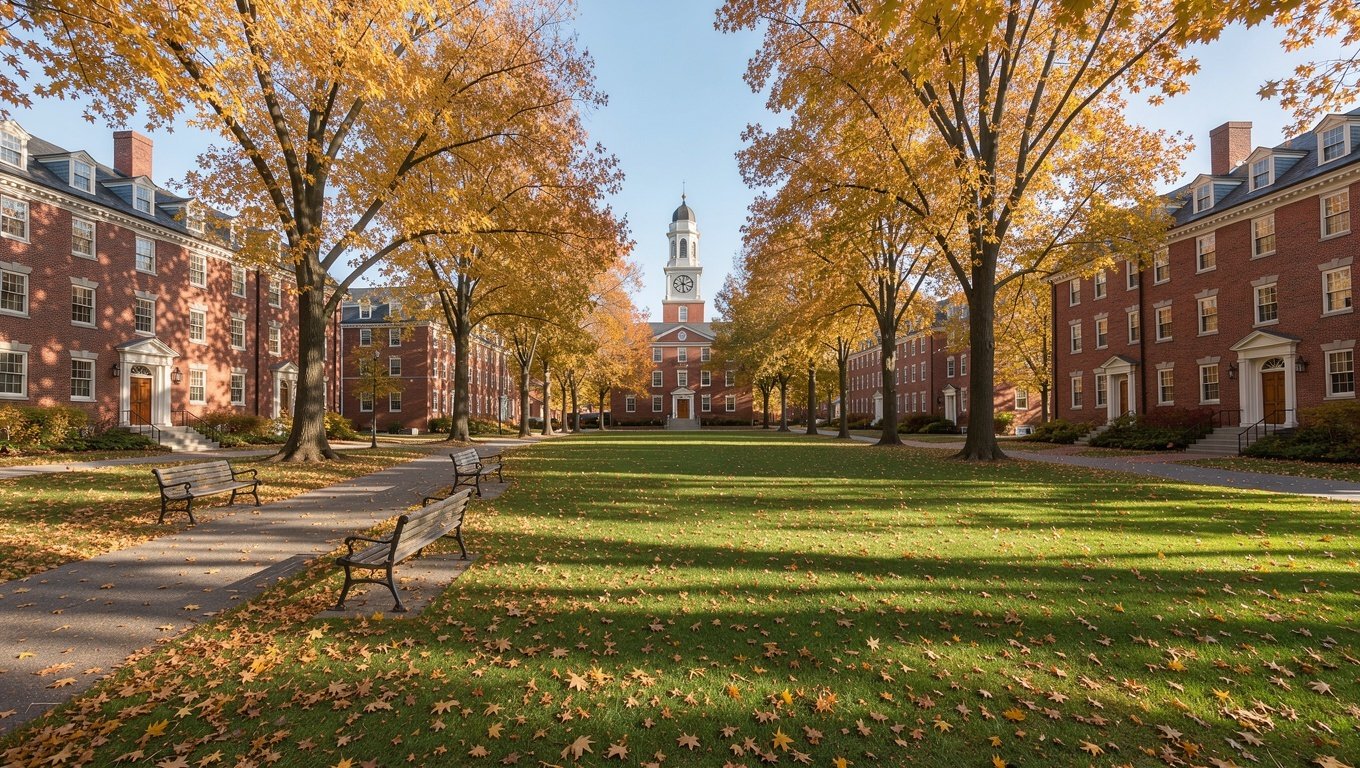
Dartmouth College
Founded in 1769, the ninth-oldest college in the United States and the only Ivy League campus in northern New England. It sits at the top of a Connecticut River valley, with Vermont on the far bank.
The campus is compact and almost entirely walkable in an hour. Start on The Green, the 1769-vintage common at the centre of Hanover, ringed by white church, inn and college buildings. Walk north up to Dartmouth Row, the four earliest brick halls, and then to Baker-Berry Library, whose tower holds the Orozco frescoes — The Epic of American Civilization, painted by José Clemente Orozco between 1932 and 1934, and viewable by the public in the reserve reading room.
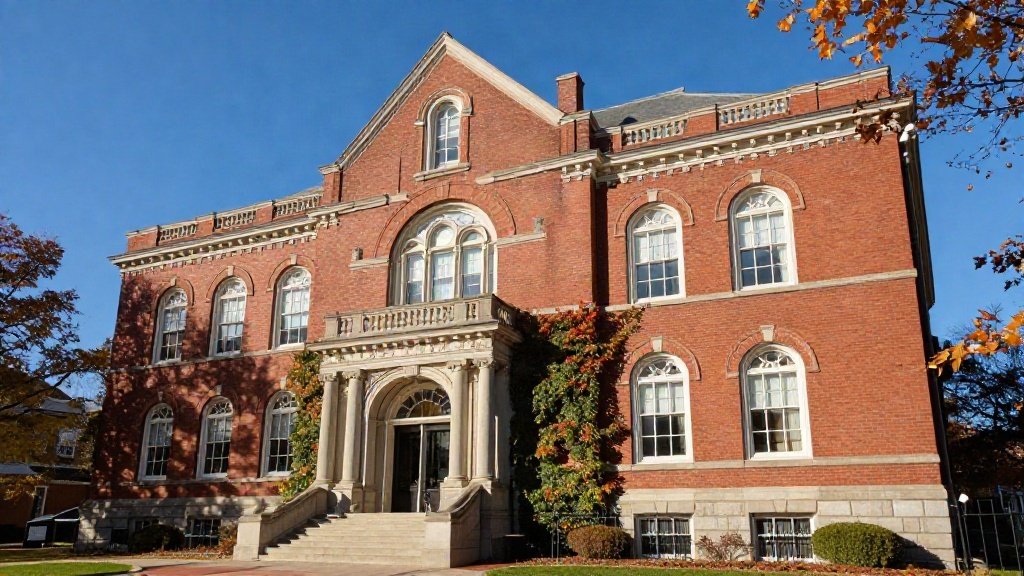
Two blocks east, the Hood Museum of Art is free and genuinely good: roughly 65,000 objects, strong on American art, Indigenous North American material and European prints. Allow an hour, longer if a special exhibition is on.
Practical visitor notes
- Tours: admissions information sessions and student-led campus tours run on a published weekday schedule; book through the admissions office rather than turning up.
- Public events: the Hopkins Center for the Arts runs film, theatre, music and lectures open to anyone with a ticket — usually the best evening option in the Upper Valley.
- Parking: Hanover's streets are metered and enforced; the parking garages off Lebaron and Wheelock Street are the simple answer.
- Food: Main Street has the density — a diner, a bakery, a noodle bar, a proper coffee roaster — plus the Hanover Inn if you want one formal dinner.
- Stay: the Hanover Inn sits on the Green; cheaper rooms are fifteen minutes away in White River Junction, Vermont, or at the chain hotels along Route 120 in Lebanon.
- Founded1769
- Time needed2–4 hrs
- Best forArchitecture, art, walks
- From Boston~2 hrs
- RegionDartmouth–Lake Sunapee
Building a day out of a campus visit
The Upper Valley rewards a full day rather than a two-hour stop. This is the shape that works in any season.
The Green and the galleries
Coffee on Main Street, then the Green, Dartmouth Row and the Orozco frescoes in Baker-Berry. Finish with the Hood Museum before lunch.
River and ridge
Walk the Connecticut River trail at the Ledyard Canoe Club, or drive twenty minutes to the Balch Hill or Velvet Rocks trails for a short climb and a valley view.
Dinner and a show
Book the Hopkins Center if something is on, otherwise eat on Main Street and drive up to the Montshire Museum side of the river for sunset over the water.
Related: the Dartmouth–Lake Sunapee region guide covers Lake Sunapee, the covered bridges and the drive south.
University of New Hampshire
The state's flagship public university, founded in 1866 as the New Hampshire College of Agriculture and the Mechanic Arts. Durham is a small town on the Oyster River with Great Bay at its back, twenty minutes from Portsmouth.
The campus is one of the most pleasant in New England to walk: a long green spine from Thompson Hall — the 1892 granite-and-brick hall with the clock tower, and the university's emblem — down past the library to the Memorial Union Building. Thompson Hall and the older quadrangle are the architectural set piece.
For visitors, UNH's value is what it adds to a Seacoast trip. It is a working research university with a public art museum, a functioning dairy bar, a Division I hockey programme and a calendar of concerts and lectures. It is also the most practical place to eat a cheap, good meal in the Durham area.
What is open to the public
- Museum of Art: the Paul Creative Arts Center galleries show changing exhibitions and are free.
- Hockey: the Whittemore Center seats about 6,500 and UNH's Hockey East games are the loudest thing in the county from October to March.
- Dining: the Memorial Union Building is open to visitors; the campus dairy bar is a local institution for ice cream made on site.
- Tours: undergraduate admissions runs weekday information sessions and walking tours — reserve in advance, especially in autumn.
- Getting there: no rail. Drive Route 108 from Newmarket or Route 4 from Portsmouth; parking is metered or permit-based, so use a visitor lot.
- Founded1866
- Time needed1–3 hrs
- Best forHockey, art, Seacoast base
- Portsmouth20 min
- RegionThe Seacoast
Five more campuses worth knowing
Smaller, but each one anchors a town you might already be driving through.
| College | Town | Founded | Why a visitor stops | Trip fit |
|---|---|---|---|---|
| Plymouth State University | Plymouth | 1871 | Compact campus on the Baker River, with a covered bridge and a town common; twenty minutes from Squam Lake. | Between the Lakes Region and the White Mountains |
| Keene State College | Keene | 1909 | Central New Hampshire's arts college; the Redfern Arts Center runs public performances and the town has a wide, café-lined Main Street. | Base for the Monadnock Region |
| Southern New Hampshire University | Hooksett / Manchester | 1932 | A large modern campus on the Merrimack; the state's biggest private university and a convenient stop off I-93. | Merrimack Valley, en route north |
| Saint Anselm College | Goffstown | 1889 | Brick collegiate-gothic quadrangle on a hill above Manchester, and a regular stop for national political debate coverage. | Ten minutes from downtown Manchester |
| Colby-Sawyer College | New London | 1837 | A small, very pretty hilltop campus between Lake Sunapee and the Kearsarge ridge, with a public art gallery. | Dartmouth–Lake Sunapee loop |
When campus towns are at their best
Fall term
Best light, best foliage, full calendar of public lectures, and the start of hockey season. Also the busiest for admissions tours — book weeks ahead.
Winter
Quiet streets and short days, but this is hockey season and the arts calendar is densest. Hanover in snow on the Green is the postcard.
Spring
Commencement in late May fills every hotel in Hanover and Durham. Otherwise a good time for uncrowded campus walks.
Summer
Term is out, so tours are limited, but the towns are at their easiest and the museums stay open. Combine with lakes or coast.
Practical notes for campus visitors
New Hampshire's colleges are working institutions, not attractions, so a little preparation is worth more here than anywhere else in the state.
- Book tours, do not improvise. Admissions tours are scheduled and capacity-limited. The same information session is usually required before a student-led walk.
- Check term dates. A campus in late August or mid-May is half empty, and some facilities close. Conversely, a mid-October weekday is the busiest.
- Museums first. The Hood at Dartmouth and the UNH Museum of Art are free and open year round; both close on some public holidays.
- Park in a garage or visitor lot. Town-centre metered parking in Hanover is strictly enforced, and campus lots are permit-only on weekdays.
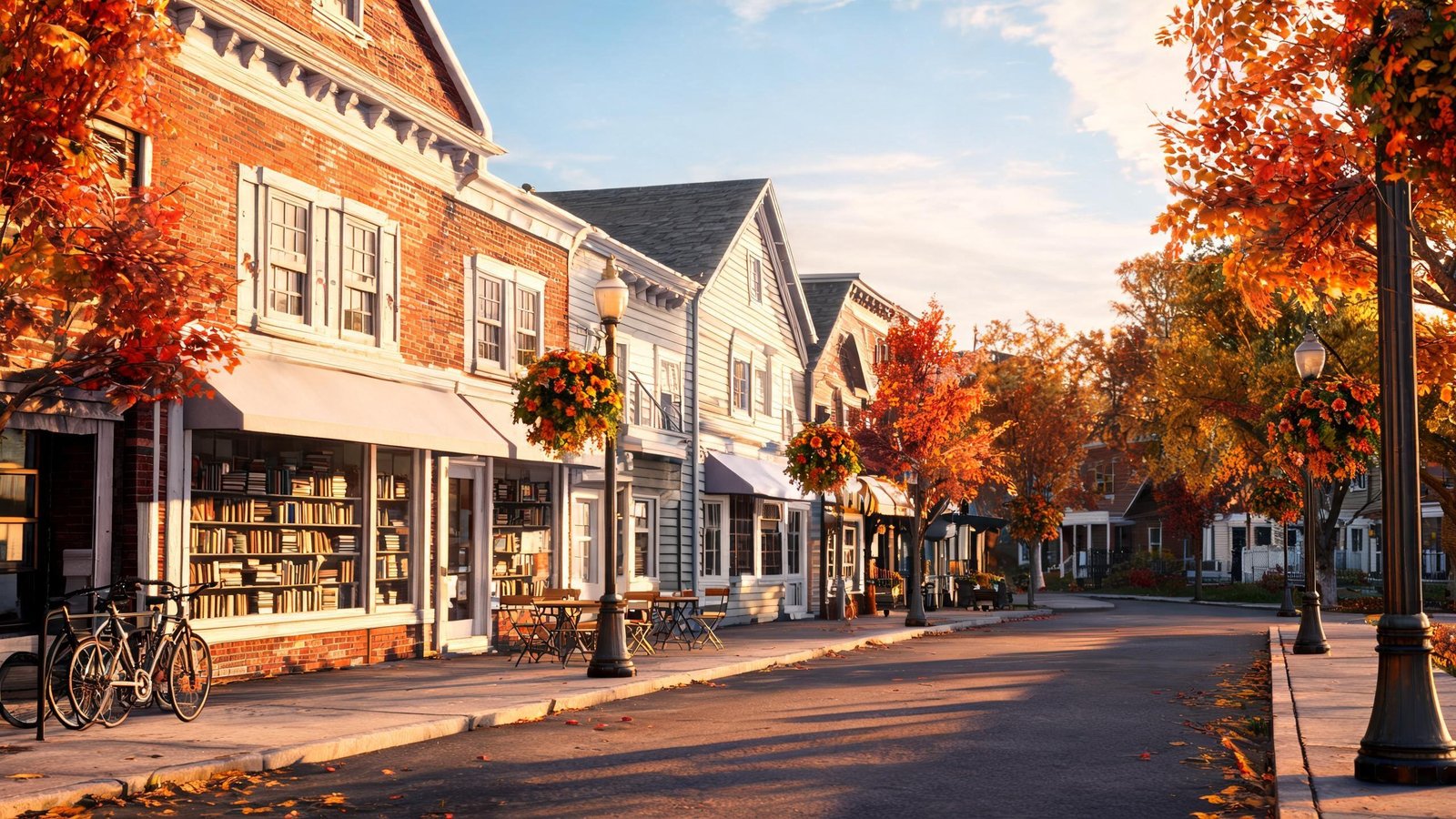
- Eat where the town eats. College towns concentrate good, cheap food in a few blocks — this is the single best reason to build a lunch stop around one.
- Cross-link your route. Hanover pairs with Lake Sunapee; Durham pairs with Portsmouth; Plymouth pairs with the Lakes Region.
For prospective families
Two campuses in one trip is realistic if you pair Hanover with New London, or Durham with Manchester. Three is not: the driving eats the day. Our five-day itinerary can absorb a Hanover morning without rebooking hotels.

Campus visit questions
Can you walk around Dartmouth as a tourist?
Yes. The Hanover campus is open, the Green and Dartmouth Row are public streets, and the Hood Museum is free. Admissions tours run on a published weekday schedule — book through the admissions office rather than arriving and hoping.
Is Durham worth a detour on a Portsmouth trip?
For a half-day, yes. It is twenty minutes from Portsmouth, the campus is compact, and if a UNH hockey game is on between October and March it is worth rearranging the evening for.
Which college town is best for an overnight?
Hanover, for setting, food and the Hanover Inn. Portsmouth next door to Durham is the better hotel town if you want the coast. Keene and Plymouth are fine for a night but have less choice.
Do I need a car?
Yes, for every campus except perhaps Durham if you base in Portsmouth and use a taxi. Hanover has free local buses once you are there, but getting there is a drive.