Plan your trip: timing, transport and the details that matter
New Hampshire is easy to travel once you accept two things: you need a car, and the season determines where you should go rather than the reverse.
Best time to visit, month by month
There is no bad month, but there are months that suit specific regions and months where a lot of the state is closed.
| Month | Best region | Crowds | Verdict |
|---|---|---|---|
| January | White Mountains (ski) | Low midweek | Coldest month; excellent snowmaking, lowest ski prices |
| February | White Mountains (ski) | High | Deepest snow, school holidays, highest ski prices |
| March | Mountains / Seacoast | Low | Sugaring season; late-season skiing is excellent |
| April | Seacoast / waterfalls | Very low | Mud season. Cheap, wet, some closures |
| May | Monadnock / Lakes | Low | Quietest good weather of the year; best value |
| June | Lakes / White Mountains | Moderate | Long days, everything open, good balance |
| July | Lakes / Seacoast | High | Peak family season; afternoon storms |
| August | Lakes / Seacoast | High | Warmest water; busiest beaches |
| September | Great North Woods / Whites | Rising | Foliage begins; best weather of the year |
| October | White Mountains | Peak | Signature foliage month; book months ahead |
| November | Seacoast / Merrimack | Very low | Between seasons; many mountain businesses close |
| December | White Mountains | Moderate | Ski areas open on snowmaking; festive towns |
Getting here
By air
- Boston Logan (BOS) — the widest flight choice. About 1 hour to the Seacoast, 2 hours to the White Mountains, 1 hour 15 to Concord.
- Manchester-Boston Regional (MHT) — smaller, easier, and well placed for the southern half of the state. About 1 hour 20 to the White Mountains.
- Portland, Maine (PWM) — convenient for the eastern White Mountains and North Conway, roughly 1 hour 30.
- Lebanon (LEB) — a small regional airport serving the Upper Valley.
By road
Interstate 93 runs north from Boston through Concord and into Franconia Notch — it is the spine of any mountain trip. Interstate 95 serves the Seacoast. Interstate 89 runs north-west from Concord to Hanover and Vermont.
By rail and bus
There are Amtrak services to Portsmouth and Durham from Boston, and a bus network connecting the larger cities. Neither reaches the mountains usefully. For anything beyond the Seacoast, a car is required.
Where to stay
The categories
- Motels and motor inns. The backbone of mountain lodging: basic, clean, often family-run, good value.
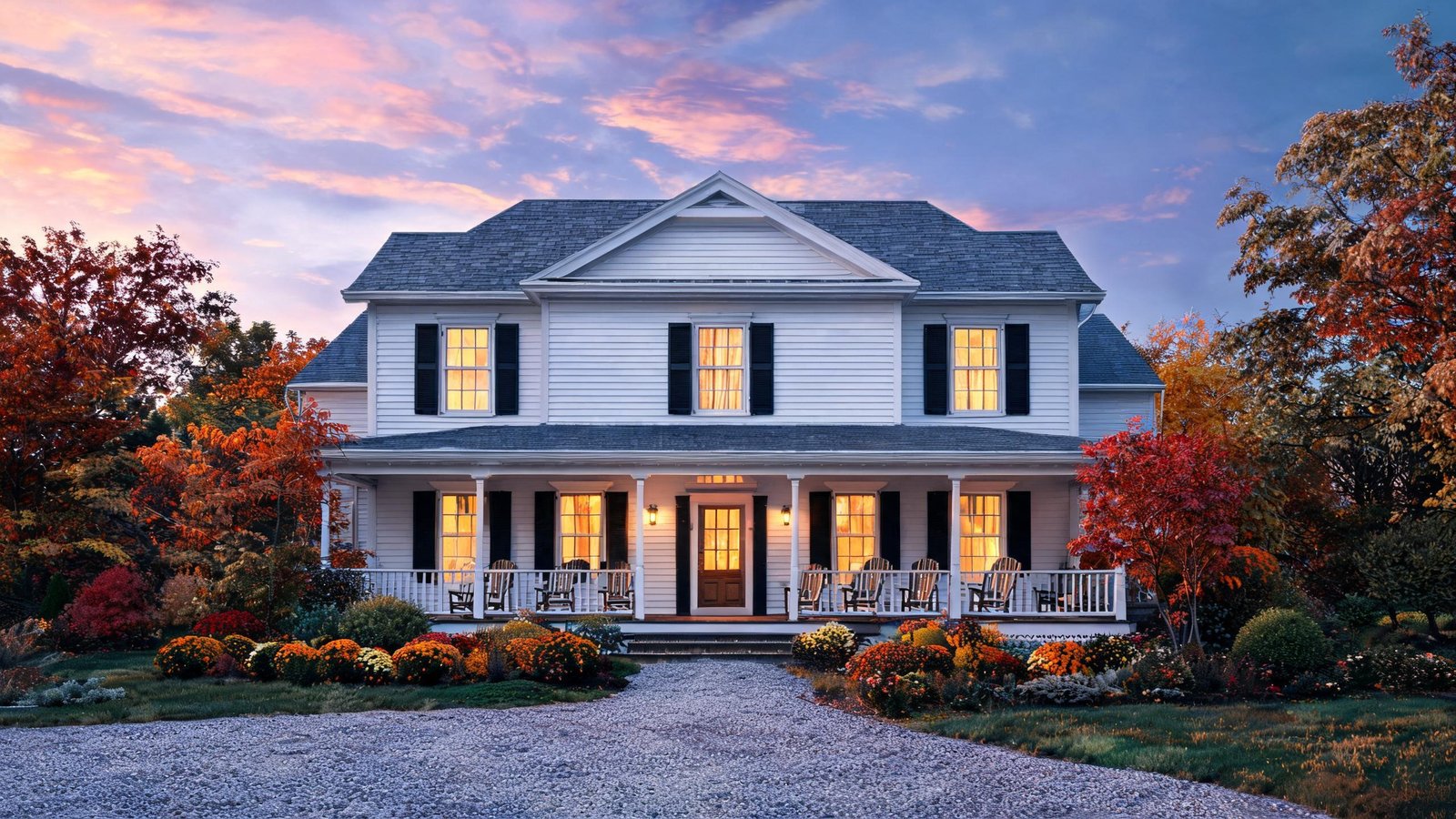
- Country inns. Small, characterful, breakfast included. The most memorable option for couples.
- Condos and townhouses. Best value for groups and families, especially near ski areas.
- Grand hotels. The Mount Washington in Bretton Woods is the showpiece; there are a handful of others.
- Lake cottages. Weekly rentals, booked months or a year ahead for July and August.
- Campgrounds and huts. State park sites, plus the Appalachian Mountain Club's high huts.
Base-town advice
Lincoln for the western Whites, North Conway for the east and family logistics, Portsmouth for the coast, Meredith for the lakes, Hanover for the Upper Valley, Keene for the Monadnock region.
Tax-free shopping, accurately explained
This is one of the state's genuine practical advantages — and one of the most commonly misunderstood.
What is actually true
- No state sales tax. Retail purchases are not taxed at the point of sale.
- No state personal income tax. Relevant to residents, not visitors.
- Meals and rooms taxes do apply — restaurant bills and hotel stays carry state and local taxes.
- Kittery, Maine is not tax free. The big outlet centres near Portsmouth are across the border and charge Maine sales tax. Compare out-the-door prices.
Where the saving is worth having
Large electronics, outdoor gear, furniture and bulk purchases. For small items the saving is real but trivial once you factor in fuel.
Concentrations of retail: the I-93 corridor around Manchester and Concord, North Conway for outdoor gear, and the Seacoast for general shopping.
Driving realities
Good to know
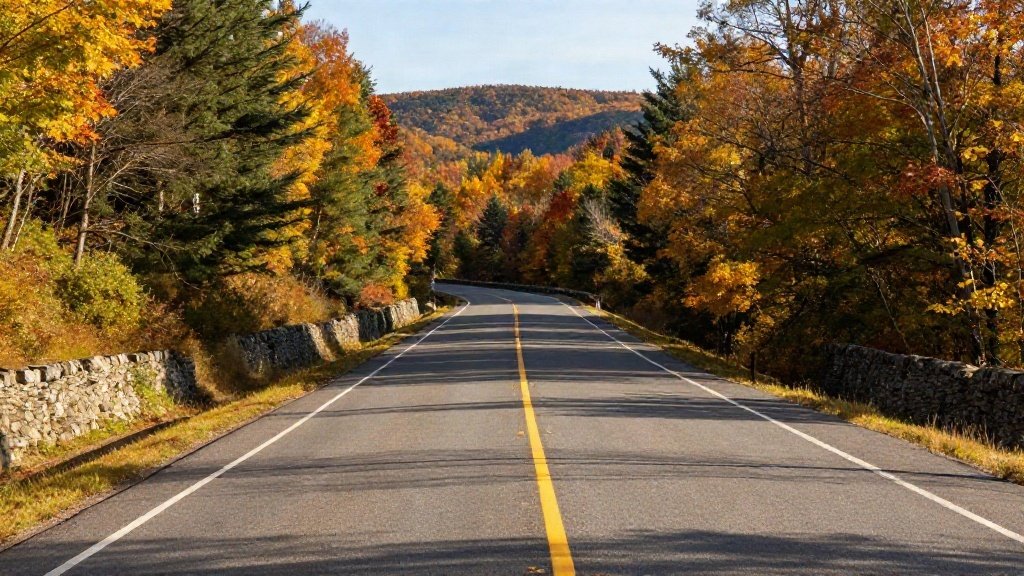
- Distances are short but slow. Mountain roads average 35–45 mph, not 65.
- Fuel up before the mountains. Services are sparse on scenic routes; some stations close early.
- Mobile signal is patchy in the notches and absent in the Great North Woods. Download offline maps.
- Moose at dusk. Slow down at dawn and dusk in the north; a moose strike is far more dangerous than a deer strike.
- Winter tyres from December to March, and carry a scraper and blanket.
- Foliage traffic adds an hour to mountain drives on October weekends.
Rules that catch visitors out
- Boating certificate required to operate a motorised vessel over 25 horsepower on state waters.
- Trailhead parking fills early; some areas require a parking pass.
- Leave No Trace is taken seriously on high trails — pack out everything, including food waste.
- Above-treeline camping is restricted in the alpine zone for good reason.
- Hunting seasons run in autumn; wear high-visibility clothing on trails.
Distances at a glance
| Route | Time | Distance |
|---|---|---|
| Boston → Portsmouth | 1 hr | 55 mi |
| Boston → Lincoln | 2 hrs | 110 mi |
| Boston → North Conway | 2 hrs 30 | 140 mi |
| Portsmouth → Lincoln | 2 hrs | 100 mi |
| Lincoln → North Conway (Kancamagus) | 1 hr | 34 mi |
| Concord → Hanover | 1 hr 10 | 65 mi |
| Lincoln → Pittsburg | 1 hr 30 | 80 mi |

What to eat
Lobster rolls — cold with mayonnaise or warm with butter. Both are correct.
Whole-belly fried clams and steamers. Order the whole-belly; if the menu defaults to strips, ask.
Maple syrup — buy it from a sugarhouse rather than a gift shop. Grades run from golden and delicate to very dark and robust.
Cider doughnuts in autumn at orchards. Apple cider from the same places.
Haddock is the regional workhorse fish and usually very good. Seafood chowder is white and thick in the New England style.
Poutine appears near the northern border, reflecting the Quebec influence.
Portsmouth has the best concentration of serious restaurants in the state. North Conway has the widest choice in the mountains. Manchester's Millyard has the best brewery density.
Planning questions
What is the best time to visit?
Late September to mid-October for foliage, July–August for lakes and beaches, January–March for skiing, and May for the quietest good weather and lowest prices. See the foliage timing guide for the most time-sensitive season.
Which airport should I use?
Boston Logan for choice of flights and price; Manchester for convenience if you are staying in the south or centre; Portland, Maine, for the eastern White Mountains.
Do I need a car?
Yes, except for a Portsmouth-only city break. There is no practical public transport to trailheads, notches or the lake country.
Is shopping really tax free?
Retail yes — there is no state sales tax. Restaurant bills and hotel stays do carry taxes. And the Kittery outlets are in Maine, which does charge sales tax.
How many days do I need?
Three for one region properly, five for two regions, seven to add the Great North Woods or the Seacoast without rushing. See itineraries.
Is New Hampshire good for families?
Very. Lakes, beaches, Story Land, Santa's Village, the science centres and the scenic railroads all suit children, and the driving distances are short enough that nobody is stuck in a car all day.
Now pick an itinerary
Three, five and seven-day routes, plus a Boston weekend.