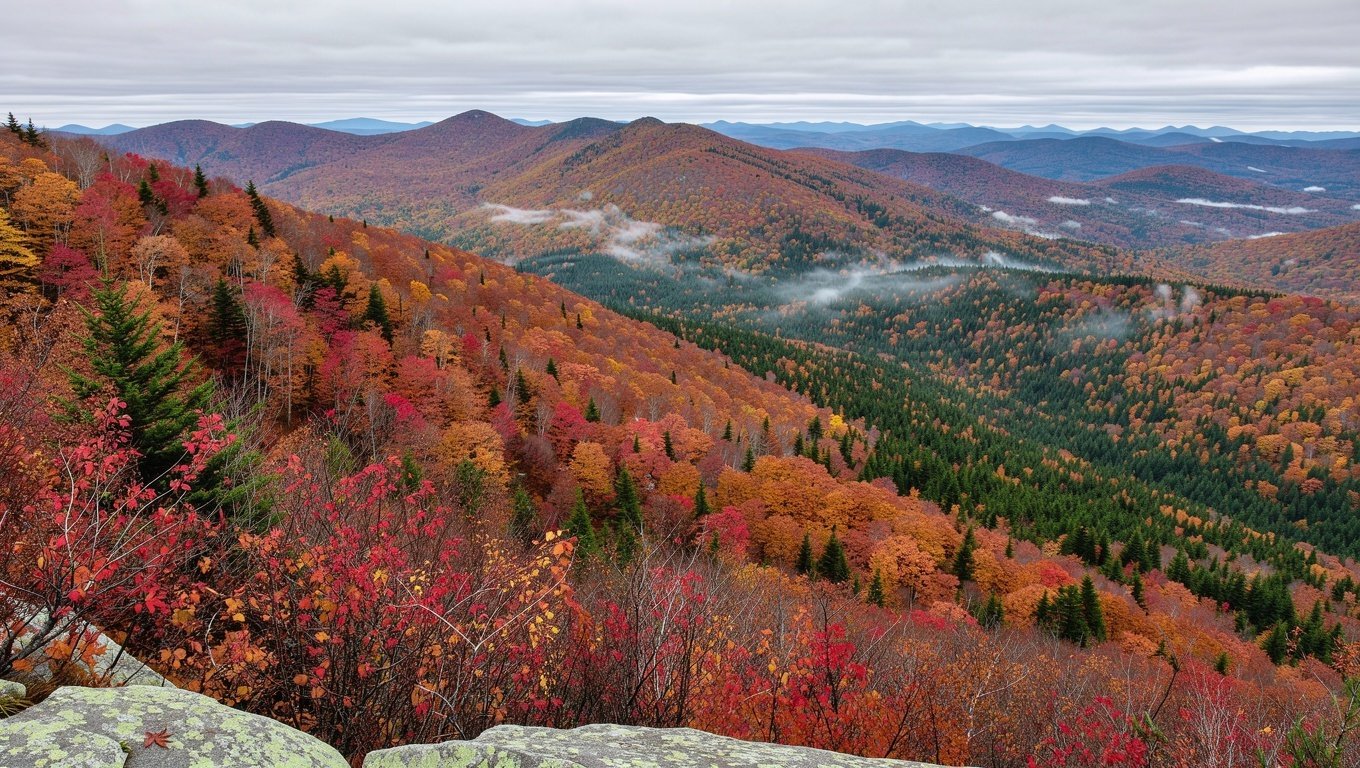
A mountainside in the White Mountains ablaze with crimson, orange and gold autumn hardwood forest
Season guide · Autumn

Fall foliage: the timing that actually matters

Colour does not arrive everywhere at once. It peaks high and north first, then moves downhill and south — which means your dates should choose your region, not the other way round.

Why the colour moves

Foliage colour is driven by day length and temperature. As nights lengthen and cool, chlorophyll breaks down and the yellow and orange carotenoids already present in the leaf become visible. The reds come from anthocyanins, which the tree produces in response to bright, cool, dry days — which is why a dry, sunny autumn produces better reds than a wet one.

Elevation adds a second variable. Every 1,000 feet roughly advances the season by several days, so ridgelines turn before the valley floors below them. That is why the White Mountains peak while the Seacoast is still green.

The practical consequence If you arrive in the last week of September, go high and go north. If you arrive in the third week of October, the mountains will be past peak — head for the Seacoast or the Monadnock lowlands instead.
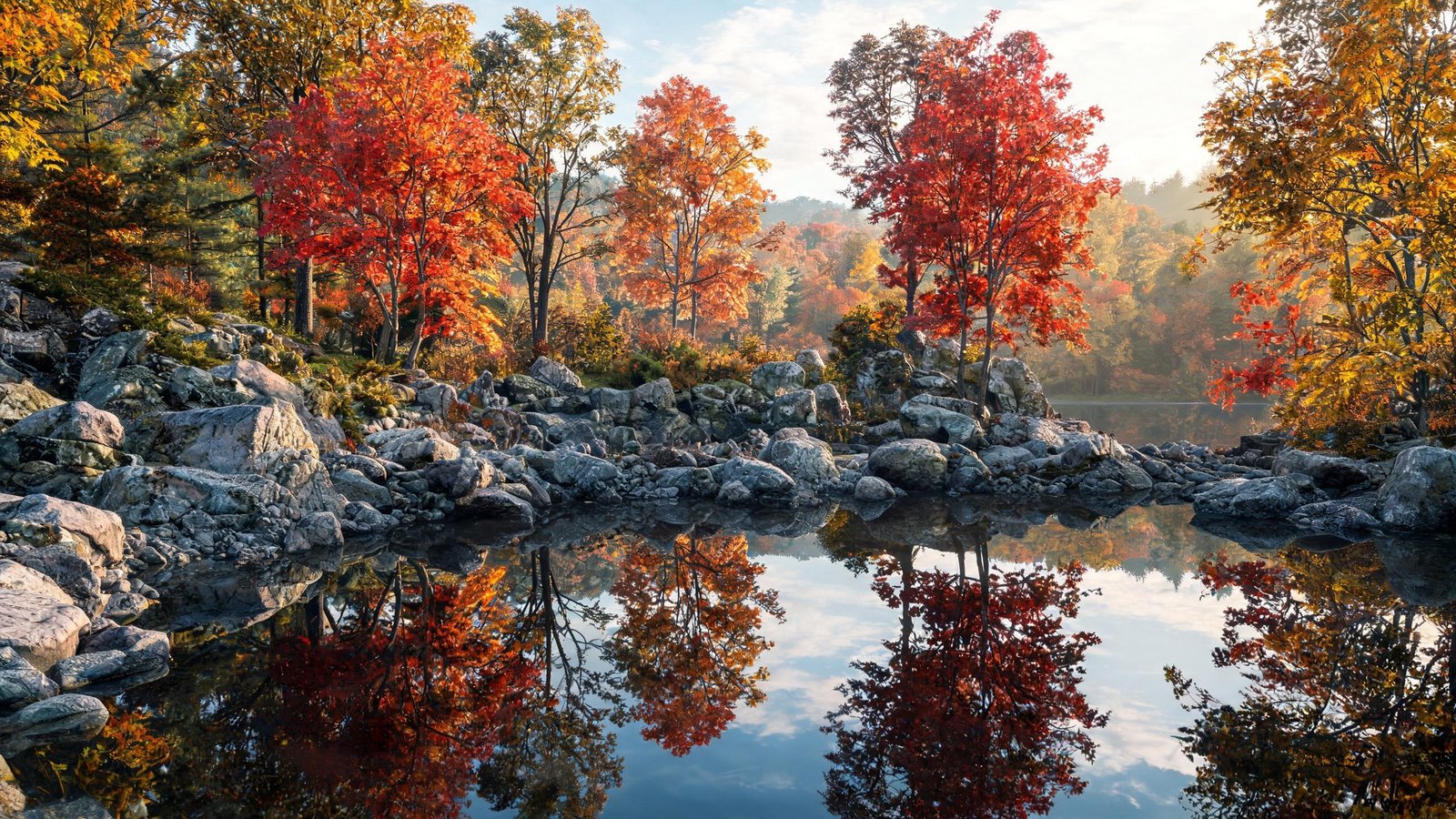
Vivid autumn maples reflected perfectly in a still New Hampshire pond with granite boulders at the edge
Timing

Peak colour by region

These are typical windows, not guarantees. The whole calendar can shift by one to two weeks depending on September temperatures and storm timing.

Typical fall foliage peak windows in New Hampshire
AreaTypical peakElevationNotes
Great North WoodsSep 20 – Oct 11,000–3,000 ftFirst to turn; birches go gold early
High White MountainsSep 24 – Oct 5Above 2,500 ftThe iconic ridgeline colour
White Mountain valleysOct 1 – Oct 12500–1,500 ftLincoln, Conway, Crawford Notch
Lakes RegionOct 3 – Oct 15500–1,000 ftReflections on the water
Dartmouth–Lake SunapeeOct 5 – Oct 18400–1,200 ftRiver valley colour, quieter roads
Monadnock RegionOct 6 – Oct 18600–1,600 ftOrchards plus foliage
Merrimack ValleyOct 8 – Oct 20200–600 ftLater, and easy to reach from Boston
SeacoastOct 12 – Oct 25Sea levelLast to peak; coastal light is best

Colour typically lasts one to two weeks at full intensity, then falls within days. A hard storm at the wrong moment can end a region's season overnight.

Best drives

Scenic routes ranked by reward vs. traffic

Most famous

Kancamagus Highway (Route 112)

34 miles between Lincoln and Conway. No billboards, no services, and pullouts at Sabbaday Falls, Rocky Gorge, the pass viewpoint and Lower Falls. Allow three to four hours.

Crowd reality: on October weekends the car parks fill by mid-morning and the road can move slowly. Drive it west to east early, or midweek if you can.
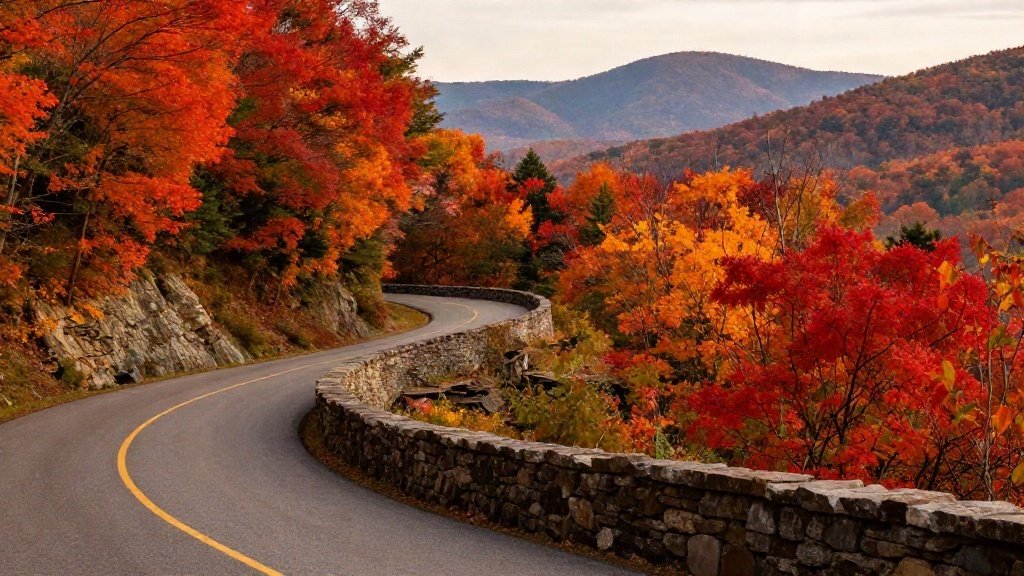
A winding road through red autumn forest with a stone overlook wall and hazy ridges beyond
Quieter

Route 302 through Crawford Notch

From Twin Mountain east to Bartlett, past the Mount Washington Hotel and through a long glacial valley. Arethusa Falls and the Elephant Head trailhead are both off this road.

Crowd reality: markedly quieter than the Kancamagus, and the notch itself is arguably more dramatic.

Underrated

Connecticut River valley

Follow Route 12A and the river roads between Hanover and Charlestown. Covered bridges, the Saint-Gaudens site, and farmland that turns later than the mountains.

Crowd reality: the quietest good foliage driving in the state. It peaks a week after the Whites, which makes it a useful late-arrival plan.

Water & colour

Lakes Region loop

Circle Winnipesaukee via Routes 25, 109 and 28. Reflections are best in still early-morning water, and the lake towns are pleasant stops.

Crowd reality: moderate. Meredith and Wolfeboro get busy at lunchtime; mornings are calm.

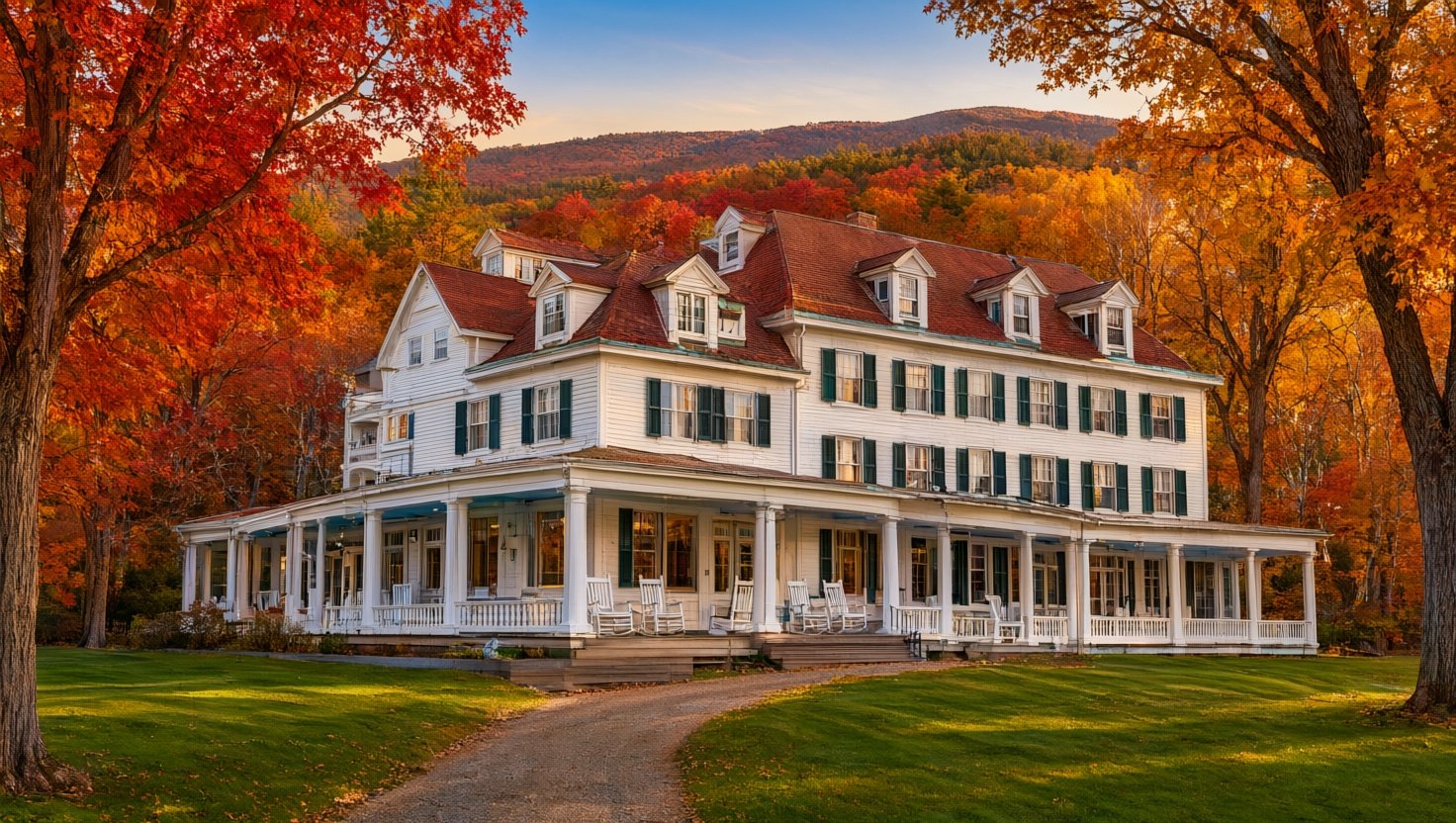
A grand historic New England hotel with a long white veranda and red roofs beneath autumn mountains
Where to stay

Booking the foliage season

Foliage is the most competitive travel window in New England after the Christmas holidays. The first three weekends of October in the White Mountains routinely sell out by midsummer, and many properties impose two- or three-night minimums.

Strategies that work

  • Go midweek. Tuesday to Thursday is dramatically easier and often 30% cheaper.
  • Stay outside the hotspot. Base in Plymouth, Ashland or Franconia rather than Lincoln or North Conway, and drive in.
  • Book a cancellation. Properties release rooms as dates approach; set alerts.
  • Consider the last week of October. Past peak in the mountains, but the Seacoast and southern regions are still good and prices drop sharply.
  • Book for next year while you are there. Many inns take bookings a year ahead during foliage.
A visitor in a cream knitted scarf among red and gold autumn maples in the White Mountains
What it actually feels like

Cold mornings, warm afternoons

Foliage season sits right on the seasonal hinge, and the temperature swing catches visitors out. A late-September morning in a notch can be near freezing, while the afternoon in the same car park reaches the low seventies. Layering matters more than a heavy coat.

The light is the other thing worth planning around. Low autumn sun comes in almost horizontally from mid-morning, which is why the colour looks flat at noon and extraordinary before nine and after four. Photographers who arrive at midday and leave disappointed usually just arrived at the wrong hour.

Wind is the enemy of a good foliage trip. A single windy night at peak can strip a ridge bare, so if you have flexibility, watch the forecast and move your drive forward rather than waiting for the weekend you originally booked.

Field craft

How to actually see the colour well

Photography

  • Overcast beats blue sky. Diffuse light saturates colour; harsh sun blows out highlights and creates flat shadows.
  • Shoot early. Calm mornings give you reflections in lakes and ponds.
  • Look for contrast. Red maples against dark evergreen spruce is the composition that works.
  • Get above it. A ridge, a tramway or a fire tower beats a roadside every time.

Logistics

  • Fuel up before you enter the mountains. Services are sparse on scenic routes.
  • Download offline maps. Signal is patchy in the notches.
  • Start before 8am. Trailhead and pullout parking fills fast.
  • Pack layers. Summit temperatures run 20–30°F below the valleys.
  • Expect leaf-peeper traffic. Add an hour to any mountain drive on an October weekend.
FAQ

Foliage questions

When is peak foliage in New Hampshire?

The high White Mountains usually peak in the last week of September to the first days of October. Lakes and southern regions follow in the first two weeks of October, and the Seacoast peaks around mid to late October. It shifts a week or more each year.

What is the best foliage drive?

The Kancamagus Highway for the classic experience. Route 302 through Crawford Notch and the Connecticut River valley roads are quieter and, in most opinions, just as beautiful.

Do I need to book ahead?

Yes — several months ahead for October weekends. Midweek is far easier. Minimum stays are common in the mountains during peak.

What if I arrive after peak?

Head south. The Seacoast and the Monadnock and Merrimack lowlands peak a week or two later than the mountains. Late October is also much cheaper and quieter.

Is foliage good in the rain?

Overcast is arguably better than sunshine for colour saturation and photography. Actual heavy rain flattens the experience and makes trails slick — but a grey day is not a wasted day here.

Other seasons

Foliage is the headline, but winter and summer each have their own logic.