Merrimack Valley: mill cities and a gold dome
The corridor almost everyone drives through on the way north. It is worth a day, especially if it rains — and it is where the tax-free shopping is concentrated.
Manchester: the Millyard
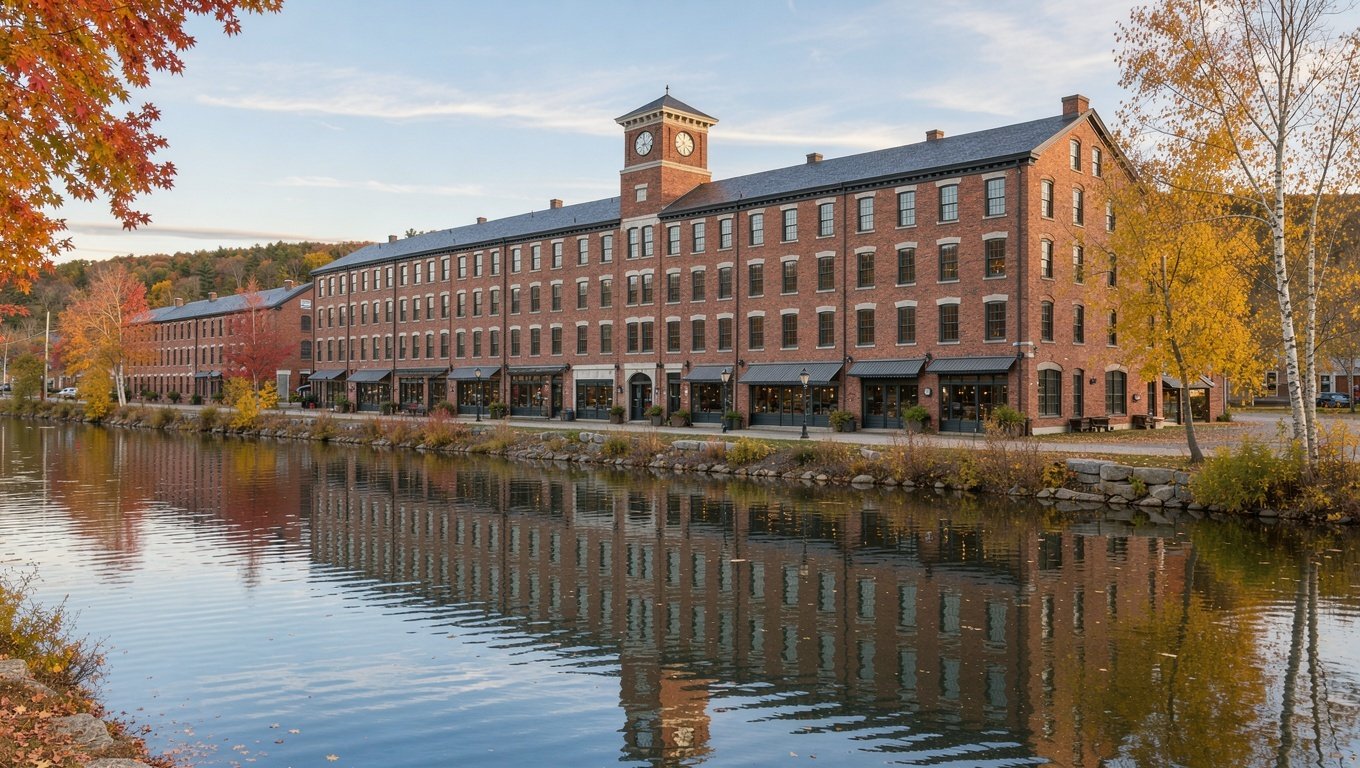
Manchester was built on textiles, and the evidence is a mile-long complex of red brick mills along the Merrimack that was once the largest textile manufacturing operation in the world. When the mills closed, the buildings did not — they were subdivided and refilled.
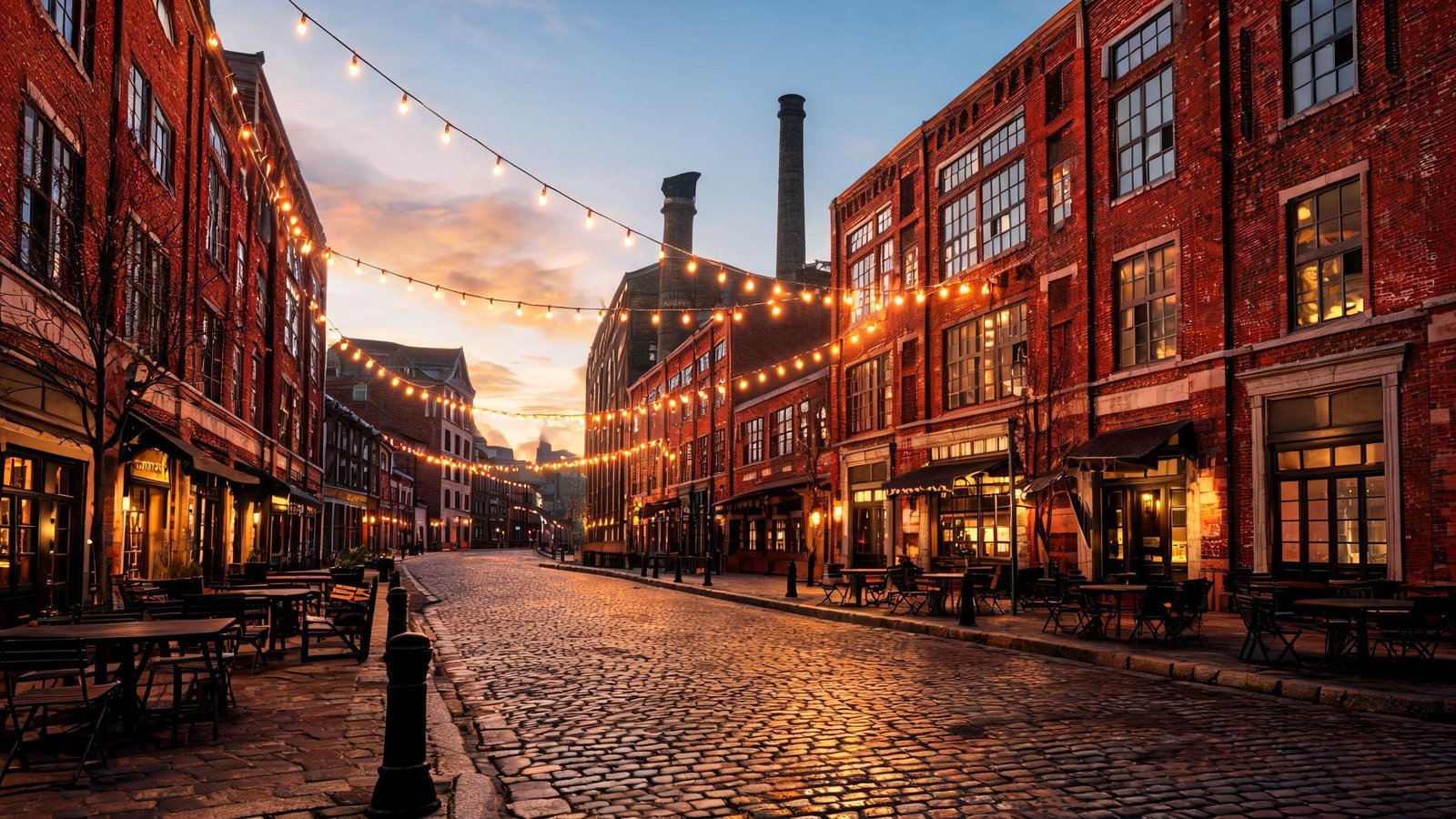
Today the Millyard holds tech companies, a science centre, breweries and restaurants, all inside the original structures. You can walk through it in an hour and get a very clear sense of what industrial New England looked like at its peak.
Rainy-day shortlist
- Currier Museum of Art — a genuinely strong collection for a city this size, with European painting, American decorative arts, and tours of the Frank Lloyd Wright-designed Zimmerman House.
- SEE Science Center — hands-on exhibits and the Millyard Museum in the same complex. Good with children.
- Millyard breweries — several taprooms occupy mill floor space with the brick and beam intact.
Concord
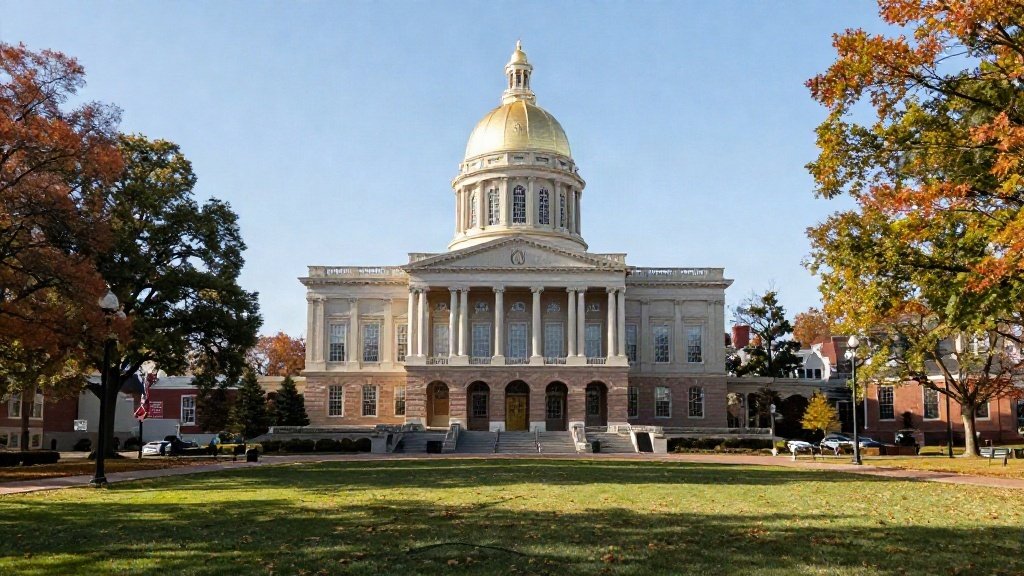
Concord is small for a state capital, which makes it easy to cover on foot. The State House has a dome covered in 24-karat gold leaf and is open to visitors on weekdays — the legislature still meets here, and the building is genuinely in use rather than preserved as a monument.
The Museum of New Hampshire History covers the state from Abenaki settlement through the industrial era, and does it well for a small institution. Main Street has a decent run of independent shops and cafés.
Just north, Boscawen and the Merrimack River valley roads make for an easy scenic detour if you want a break from the interstate.
Tax-free shopping, explained
New Hampshire has no state sales tax and no state personal income tax. For visitors from Massachusetts, Maine, Vermont and New York, that is a 5–8% saving at the till on everything.
Where it actually pays off
- Large electronics — the percentage saving is meaningful on a laptop or a television.
- Outdoor gear — outdoor retail is well represented here and in North Conway.
- Furniture and home goods — several large outlets sit along the I-93 corridor.
- Alcohol — the state operates its own liquor stores with competitive pricing.
- Pottery and craft — the League of New Hampshire Craftsmen shops sell tax-free work.
Where it does not
Sales tax is not charged on prepared food and accommodation either, but hotel and meals taxes do apply. And if you are driving up specifically to shop, fuel and tolls eat into the saving quickly.
Quick reference
- Sales tax — none, statewide.
- Meals & rooms tax — still applies to restaurants and lodging.
- Best for — electronics, outdoor gear, furniture, alcohol and craft.
- Careful — Maine and Massachusetts both charge sales tax.
Kittery, Maine, just over the border from Portsmouth, has enormous outlet centres — but Maine does charge sales tax. Compare the out-the-door price, not the sticker. See the full tax-free notes in the planning guide.
Distances from Concord and Manchester
| From | To | Time |
|---|---|---|
| Manchester | Concord | 25 min |
| Manchester | Boston | 1 hr |
| Manchester | Portsmouth | 50 min |
| Concord | White Mountains (Lincoln) | 1 hr 20 |
| Concord | Lake Winnipesaukee | 50 min |
| Concord | Hanover | 1 hr 10 |
Worth knowing
- Manchester–Boston Regional Airport sits south of the city and is a smaller, easier alternative to Logan for some routes.
- Parking in downtown Manchester and Concord is plentiful and cheap by East Coast standards.
- The Millyard is best explored on foot; wayfinding is patchy, so pick a destination rather than wandering.
How long to allow
A half day covers the Millyard and the Currier Museum. A full day adds Concord's State House and history museum.
Most visitors treat the region as a stop on the way to the mountains rather than a base — which is fair. Its real value is as a wet-weather plan and a shopping errand.
Following the Merrimack
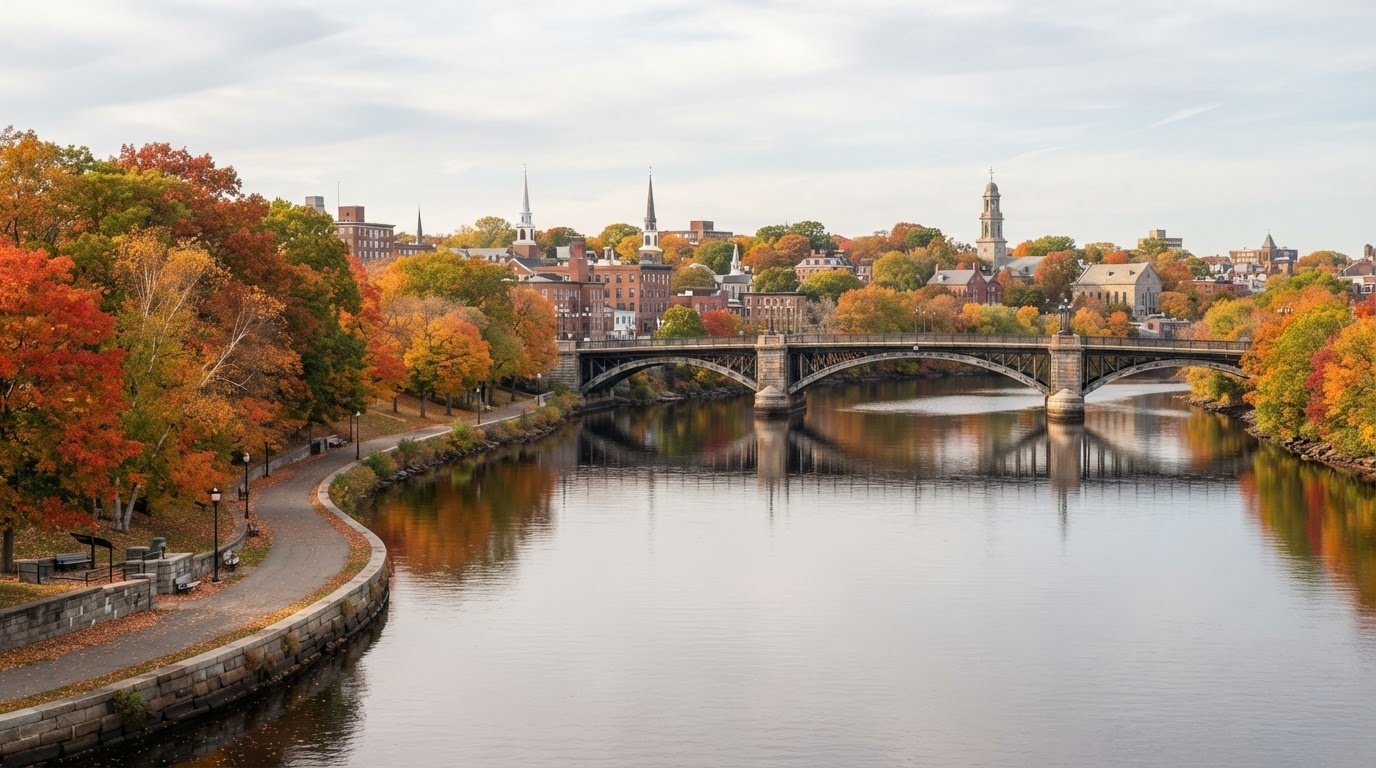
The river is the reason the cities are here, and it is still the best way to understand the region's shape. Route 3 and the valley roads run alongside it from Concord south through Manchester and Hooksett, linking the mill districts that the waterpower built.
In autumn the banks turn a week or so after the mountains, which makes this a useful late-season alternative when the notches are already bare. Riverside parks in Concord and Manchester give you a walkable stretch of it without leaving town.
The region rewards a half-day rather than a stay: an hour in the Millyard, an afternoon in Concord, and a riverside drive between them.

If you have an hour
Walk from the Millyard along Commercial Street to the river, cross at the footbridge and come back through the mill courtyards. It is flat, it is free, and it shows you the whole argument for the city in under a mile.
Merrimack Valley questions
Is New Hampshire really tax free?
There is no state sales tax and no state personal income tax, so retail purchases are not taxed at the till. Meals and rooms taxes still apply to accommodation and restaurant bills. See the planning guide for detail.
What is there to do in Manchester?
The Millyard for industrial architecture, the Currier Museum of Art, the SEE Science Center, and a cluster of breweries inside the old mill buildings. It is a half-day city, best used on a rainy day or as a shopping stop.
Is Concord worth a visit?
Yes, briefly. The State House is open on weekdays and the history museum is solid. An afternoon covers it comfortably.
Should I use this region as a base?
Generally no — the scenery is elsewhere. But it is convenient for an early flight out of Manchester, and it is the cheapest accommodation near the mountains in foliage season if you are willing to drive an hour.
Continue north
From Concord, the White Mountains are 80 minutes away and the Lakes Region under an hour.